Head of Sub-Saharan Africa at Citigroup, Akin Dawodu, has said that the new U.S. tariffs on African imports could accelerate the continent’s pivot toward alternative global trade partners.
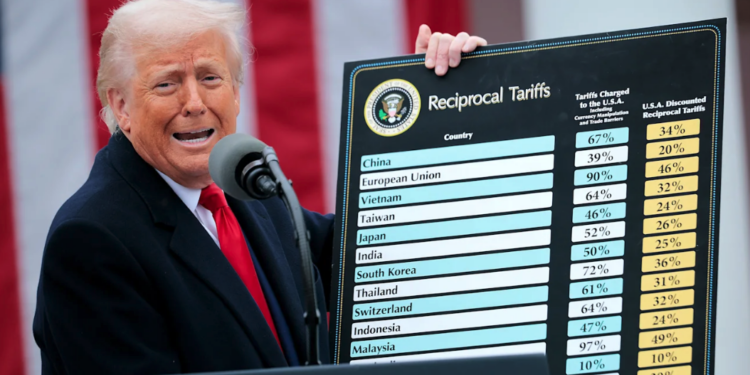
In a revised global trade plan announced Thursday, former U.S. President Donald Trump imposed fresh tariffs of up to 30% on goods from countries including South Africa and Algeria.
Nigeria and Ghana were also hit with 15% tariffs, signaling a tougher U.S. stance that may further marginalize Africa in American trade flows.
According to Dawodu, Africa’s vast resources, holding about 60% of the world’s remaining arable land and a third of its mineral reserves, make it strategically important for future industries, including those supporting artificial intelligence.
Yet, the continent still accounts for less than 2% of U.S. trade, Dawodu noted.
“There are global markets for those commodities, so they can be routed to other markets,” he said, underscoring Africa’s options in a shifting global trade landscape.
- For long-term resilience, Dawodu stressed the importance of intra-African trade. He called on governments to address non-tariff barriers such as inconsistent legal frameworks, poor logistics, and restrictions on labor mobility.
- He also emphasized the role of the African Continental Free Trade Area (AfCFTA) in boosting regional commerce.
Earlier, Afrieximbank Research had stated that President Trump’s reciprocal tariffs might have a limited direct impact on African economies, given the continent’s deepening trade ties with China.