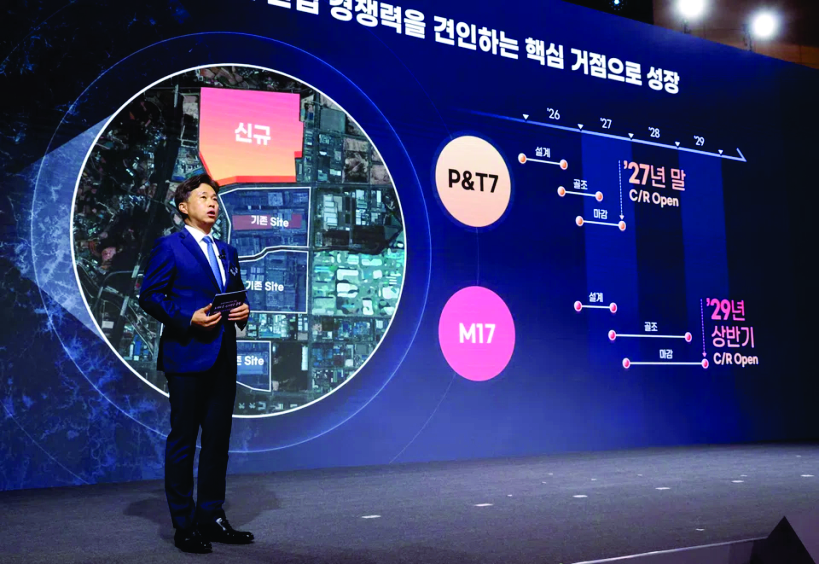
SK Hynix said it would invest 100 trillion won (US$64.4 billion) to build new chip plants, including one for Nand flash memory, as part of a massive South Korean investment drive aimed at spreading returns from the artificial intelligence boom beyond Seoul.
The projects in the central city of Cheongju outlined on Thursday (Jul 2) are included in a broader US$2.1 trillion plan, unveiled by the chipmaker and its local rival Samsung Electronics this week, which also included a new chip cluster in the south-west and existing projects.
The huge capacity build-out by the South Korean chipmakers is a major political win for the country’s President Lee Jae-myung, who wants the AI windfall to help revive economies beyond the Seoul metropolitan area, though it is stoking fears of a painful reckoning if AI spending cools.
At an event on Thursday attended by Lee, SK Hynix CEO Kwak Noh-jung said that the company would spend 80 trillion won to build a new factory for Nand memory chip production by 2029, and 20 trillion won for a chip packaging plant by late 2027 in Cheongju.
The plan to invest 100 trillion won in Cheongju was announced on Monday, but details of the investment were not provided at the time.
South Korea is hoping that the investments will double the country’s memory chip production capacity within five years. Samsung and SK Hynix are the world’s largest manufacturers of memory chips, alongside US rival Micron.
The investments come as demand from AI hyperscalers has caused a global shortage of all types of memory chips.
Prices for both Nand flash memory, a storage chip that retains data even when a device is turned off, and dynamic random-access memory (Dram) have soared to historical highs.
Chip sell-off
SK Hynix shares ended down 15 per cent and Samsung shares closed 9 per cent lower on Thursday, hit by a global sell-off in chipmakers as Meta Platforms’ plan to sell computing power raised questions over excess AI computing capacity.
Michael Burry, the investor whose successful bets against the US housing market in 2008 were recounted in the movie “The Big Short”, expressed caution about the massive South Korean investment plan in a subscriber-only Substack newsletter on Tuesday.
The investment drive set off alarm bells for Burry over whether the massive sums of money being poured into AI could ever generate appropriate returns, based on the report, which added that he had made more bearish bets against AI-related stocks.
Source: businesstimes