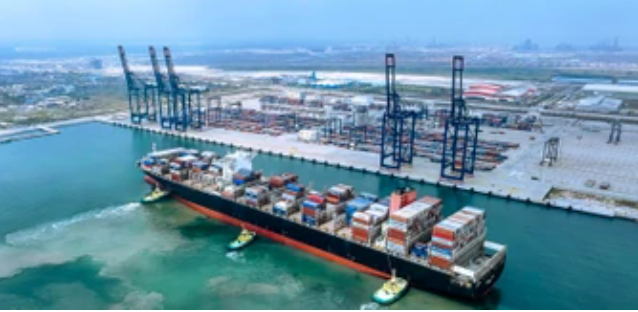
Angola has now become the latest African country to secure a major Chinese-backed infrastructure investment after Huatong Angola Industry committed $900 million to developing a new port terminal.
Specifically, the agreement covers the sub-concession, construction and operation of the Barra do Dande Port Terminal in the northern province of Bengo.
The deal was signed in Luanda on July 20 by the state-owned Barra do Dande Development Company, Huatong Angola Industry and financial partner Berkshire Waterhouse Infrastructure Development Ltd.
Under the agreement, the sub-concession will run for 25 years and may be renewed depending on the project’s commercial performance and long-term viability.
Angola bets on a new industrial export gateway
The project is expected to transform Barra do Dande into a major gateway for goods produced within the surrounding free trade zone.
Roque Saraiva, chairman of the Barra do Dande Development Company, said the parties signed two investment instruments.
The first agreement covers the $450 million port terminal, while the second includes supporting infrastructure, bringing the total planned investment to $900 million.
Meanwhile, Berkshire Waterhouse representative João Rufino said the investors would release the funds in phases as the project receives the required approvals.
The investment will finance the construction of the terminal, energy facilities and access roads connecting the port to industries operating within the free trade zone.
“This is entirely a private-sector investment,” Saraiva said.
Notably, the project will be implemented in three phases, with the first expected to take 24 months before the port begins handling exports from factories in the Barra do Dande Free Trade Zone.
Chinese capital spreads across strategic African assets
The Angola agreement adds to a growing wave of Chinese investments targeting some of Africa’s most strategic economic assets.
In June 2026, Kenya signed a $1.2 billion agreement with China Road and Bridge Corporation to expand Jomo Kenyatta International Airport.
The project includes a new terminal and other upgrades intended to raise the airport’s annual passenger capacity from 7.5 million to 22 million.
Elsewhere, Chinese battery manufacturer Gotion High-Tech is developing a $1.3 billion electric vehicle battery plant in Morocco.
The company could eventually invest as much as $6.5 billion as it expands production capacity.
Moroccan officials have described the facility, which is expected to begin production in 2026, as Africa’s first battery gigafactory.
By March 2026, Morocco’s Mohammed VI Tangier Tech City had also secured planned investments worth about $3.5 billion from 42 companies. Thirty-four of them were Chinese.
Source: Africabusinessinsider