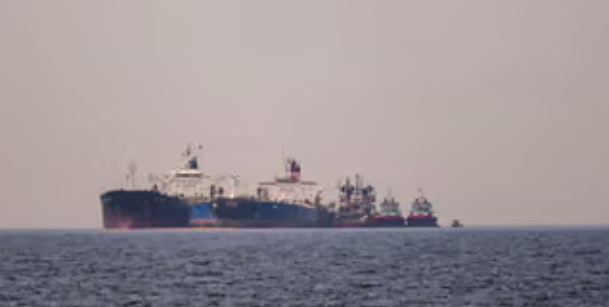
The Xin Long Yang, Rodos and Amazon turned north towards Egypt’s Suez Canal on Tuesday, July 21, 2026, instead of continuing south past Yemen through the Bab el-Mandeb Strait.
The change places the vessels on a longer journey through the Mediterranean and around Africa’s Cape of Good Hope before reaching Asia.
The Iran-aligned Houthis warned shipping companies against loading or discharging cargo at Saudi Arabian ports, saying vessels involved in such operations risked being targeted “in any location”.
It also declared what it described as a naval blockade against Saudi Arabia, increasing pressure on a shipping corridor already affected by the closure of the Strait of Hormuz.
Tankers abandon route past Yemen
The Xin Long Yang loaded about two million barrels of Saudi crude at the Red Sea port of Yanbu, while the smaller Rodos carried about 700,000 barrels destined for India.
Meanwhile, the New Prime turned back near Oman before entering the Red Sea to load at Yanbu, Saudi Arabia’s main alternative oil outlet following disruption in the Strait of Hormuz.
Saudi Arabia transports crude from its eastern oilfields to the Red Sea through the East-West pipeline, allowing its exports to avoid the Gulf shipping route.
However, the Houthi warning has now placed pressure on both routes used to move Middle Eastern oil to international markets.
Tankers avoiding the Yemeni coast must sail north through Suez, cross the Mediterranean and travel around the Cape of Good Hope before continuing towards China and India.
Consequently, the diversion can add up to four weeks to some journeys and raise fuel, insurance and chartering costs, while increasing business for African ports and maritime service providers.
About three million barrels per day of Saudi crude could be redirected around Africa if the disruption continues.
Warning follows renewed Saudi-Houthi confrontation
The blockade announcement followed a renewed military confrontation between the Houthis and Saudi-backed forces in Yemen.
The Houthis accused Saudi Arabia of bombing the runway at Sanaa International Airport on July 13.
The disruption has worked to the advantage of African ports, including Walvis Bay and Lüderitz in Namibia, Port Louis in Mauritius, Tanger Med in Morocco, Tema in Ghana, and Cape Town and Durban in South Africa, as shipping companies avoid conflict zones in the Middle East.
Fuel suppliers have expanded operations at several of these ports to serve vessels taking the longer route around the Cape of Good Hope.
South Africa sits directly along the diversion route, but congestion, regulatory hurdles and limited refuelling capacity have pushed some shipping companies towards Namibia and Mauritius.
Egypt is also regaining strategic importance as tankers turn towards the Suez Canal.
The canal is one of the country’s main sources of foreign currency. It generated $9.4 billion during the 2022/23 financial year before earlier Houthi attacks reduced traffic and revenue.
Source: Africabusinessinsider