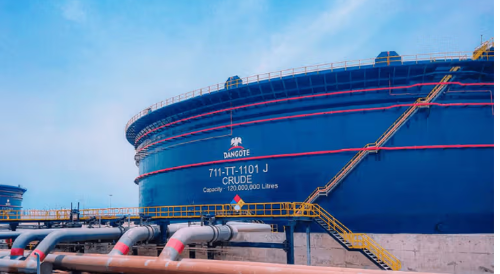
According to commodity intelligence firm Kpler, crude processing at the 650,000-barrel-per-day refinery has fallen to between 350,000 and 400,000 barrels per day since July 10, prompting the firm to lower its July throughput forecast to about 450,000 barrels per day, from an earlier estimate of 650,000 barrels.
The reduction follows maintenance involving the refinery’s Flue Gas Steam Generator (FGSG), a heat recovery system that has constrained operations across the plant.
Kpler said the latest disruption differs from previous outages because it is not directly linked to the refinery’s residue fluid catalytic cracker, which has historically been the facility’s main operational bottleneck.
The lower processing rates are expected to reduce July production by around 75,000 barrels per day of gasoline, 50,000 barrels per day of jet fuel and 40,000 barrels per day of gasoil, according to Kpler’s estimates.
The firm said seaborne exports of refined products have consequently fallen to their lowest level in three months.
The maintenance comes after the refinery significantly increased output in recent months. In June, Dangote processed close to 700,000 barrels per day during performance tests, exceeding its nameplate capacity after optimisation work increased effective capacity by about 10%.
That higher output helped transform the refinery into one of the Atlantic Basin’s fastest-growing suppliers of refined petroleum products.
Kpler noted that since March, Dangote has expanded exports of petrol, diesel and particularly jet fuel into Europe, helping fill supply gaps created by lower refinery exports from Russia and tighter product flows from parts of the Middle East.
As a result, any prolonged reduction in production now has implications beyond Nigeria’s domestic fuel market.
The slowdown also comes at a sensitive time for Nigeria. The Nigerian Midstream and Downstream Petroleum Regulatory Authority has previously said Dangote supplied about 90% of the country’s petrol in May, making the refinery central to domestic fuel availability and pricing.
Earlier this month, the refinery temporarily suspended naira-denominated truck loading before later resuming local currency sales after reviewing its pricing.
Despite the setback, analysts expect the disruption to be temporary.
Kpler said maintenance should be completed during the final week of July, allowing the crude distillation unit to return to full operating rates within days, while the refinery’s catalytic cracker is expected to reach between 80% and 90% utilisation by the first week of August.
Refinery throughput is forecast to recover to between 650,000 and 675,000 barrels per day through August and September if repairs proceed as expected.
The operational performance will be closely watched as Dangote Refinery strengthens its finances ahead of a planned stock market listing. Last week, the company announced it had raised $2.5 billion through a private placement to support its growth strategy.
Source: Africabusinessinsider