Now, Gulf oil producers are accelerating plans to reduce their dependence on the route, a shift that could place Africa’s Red Sea coastline —touching countries like Egypt, Sudan, Eritrea, and Djibouti—at the heart of a new global energy map.
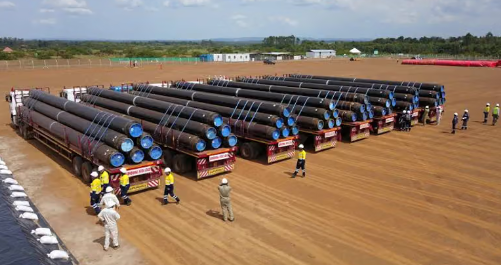
Governments and energy companies across the Gulf are pursuing at least seven major pipeline projects that are either under construction, in advanced planning or under discussion.
The projects are designed to reroute crude oil to export terminals on the Red Sea, Gulf of Oman and the Mediterranean, bypassing the Strait of Hormuz, where tensions with Iran have repeatedly disrupted shipping.
Africa’s Red Sea corridor gains strategic importance
The planned infrastructure could significantly increase the strategic importance of the Red Sea, placing African countries bordering the waterway along an increasingly vital global energy corridor.
Saudi Arabia already operates its East-West Pipeline, which transports crude from the Abqaiq processing hub to Yanbu on the Red Sea. Built during the Iran-Iraq war in the 1980s, the pipeline has become a crucial alternative as regional tensions intensify.
The United Arab Emirates is also expanding a $3 billion pipeline linking its oil fields to Fujairah on the Gulf of Oman, with completion expected by mid-2027.
Iraq is simultaneously pursuing new export routes through Turkey and Syria that could transport up to 2 million barrels per day, while discussions continue over another pipeline to Jordan’s Aqaba port on the Red Sea.
According to Goldman Sachs, the combined projects could add 3.8 million barrels per day of bypass capacity by the end of 2027, rising to 7.3 million barrels per day by the end of 2028. If completed, as much as 60% of the Gulf’s pre-war oil exports—around 23 million barrels a day—could avoid the Strait of Hormuz altogether.
The investment drive follows months of disruption linked to the Iran conflict, which has kept pressure on the Strait of Hormuz and pushed Brent crude above $100 per barrel. Gulf producers increasingly view dependence on a maritime chokepoint along Iran’s coastline as an unacceptable long-term risk.
Despite the diversification, the alternative routes remain exposed to geopolitical risks. Yemen’s Iran-backed Houthi rebels have continued attacks on vessels in the Red Sea, including recent strikes on Saudi oil tankers, underscoring that the region’s alternative export corridor is also vulnerable.
Some of the new routes also come with higher transportation costs. Oil shipped through the Mediterranean may require longer voyages around Africa to reach Asian markets, while the Suez Canal cannot accommodate the world’s largest crude carriers, reducing shipping efficiency.
Source: Africabusinessinsider