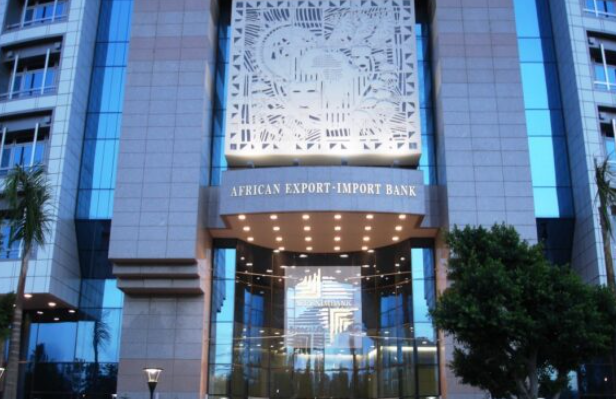
The African Export-Import Bank (Afreximbank) has committed $2 billion through 2027 to support Africa’s creative and cultural industries, expanding its financing ambition as the bank seeks to strengthen the commercial infrastructure, intellectual property ownership and value chains underpinning the continent’s creative economy.
The commitment was announced as Creative Africa Nexus (CANEX) WKND 2026 opened in Lagos on November 5. The four-day event, hosted by the Federal Government of Nigeria and organised by Afreximbank through its Creative Africa Nexus programme, brought together investors, policymakers, creatives and business leaders from Africa and the diaspora.
According to a statement published on the bank’s website, the expanded commitment builds on earlier financing initiatives aimed at helping African creative businesses scale operations and retain a greater share of the economic value generated by their products.
Afreximbank President and Chairman of the Board of Directors, Dr George Elombi, said increasing production financing alone would not be sufficient to develop the sector unless Africa also strengthened ownership and value capture across the creative-industry supply chain.
Citing estimates from the United Nations Economic Commission for Africa, Elombi said the continent’s creative economy is valued at approximately $60 billion, representing around 2% of the global creative industry.
“We can put these financing schemes into music and movie productions. Yet the value we derive will still be low. We must therefore focus on building the creative ecosystem,” he said.
Elombi identified distribution, branding, marketing platforms and intellectual property ownership as areas where African businesses need to retain more value. His remarks point to a broader challenge facing the sector: expanding production capacity without developing the commercial systems required to distribute, market and monetise African creative content at scale.
The $2 billion financing initiative will cover several segments of the creative economy, including film and television, music, fashion, sport, literature and publishing, gastronomy and visual arts.
Nigeria is also developing financing mechanisms for the sector through the Investment in Digital and Creative Enterprises programme (iDICE), which is expected to unlock more than $600 million in financing for digital and creative businesses.
The commercial potential of the sector was also reflected in the 2024 edition of CANEX WKND in Algiers, which attracted participants from 81 countries and facilitated more than $540 million in trade and investment deals.
Financing and investment take centre stage
A major feature of CANEX WKND 2026 was the Creative Economy Finance Summit, organised by Afreximbank in partnership with the Creative Economy Practice at Co-Creation Hub. The summit was designed to bring financial institutions and investors together to examine how creative-economy transactions can be structured, financed and de-risked.
CANEX Creations Inc. was also scheduled to lead discussions on investment in African intellectual property, while the CANEX Deal Room and Creative Pitch Sessions were intended to connect creative entrepreneurs with potential financiers and investors.
A high-level discussion on November 6, titled “One Market, One Culture: Building the Creative Economy of Global Africa”, examined how the international appeal of African culture could translate into stronger businesses, exports and investment. Participants included Nobel Laureate Professor Wole Soyinka, ministers responsible for culture and the arts from Côte d’Ivoire, South Africa and Rwanda, and representatives of the International Finance Corporation and Afreximbank.
Technology and intellectual property
Technology featured prominently in the programme, with discussions examining artificial intelligence, authorship, intellectual property rights and the changing economics of creative production.
The CANEX CreaThon, organised with pan-African technology company Gebeya, brought together creators, developers and innovators to develop projects in music, video and gaming. Participants were set to receive mentorship, computing resources and access to African-built digital tools, alongside a $50,000 prize pool.
The technology discussions reflect the growing influence of digital platforms and artificial intelligence on how creative content is produced, distributed and commercialised. They also raise questions about ownership, rights protection and the distribution of revenue generated by African intellectual property.
Film and television sessions examined the commercial infrastructure required to expand African content into international markets. These included “Stories Without Borders: Africa, Hollywood & the Global Diaspora”, featuring former Afreximbank President Professor Benedict Oramah, and “Made in Africa, Watched in Africa”, which examined research on film distribution, audiences and financing across Egypt, Kenya, Nigeria, Rwanda, Senegal and South Africa.
Sport and fashion businesses
Sport formed another part of the programme, with discussions covering athlete development, management and commercialisation. Former professional footballers Didier Drogba and Jay-Jay Okocha were scheduled to participate in a session titled “When Giants Speak: The Business of the Game”. The programme also included a Legends Football Match at Onikan Stadium on November 8.
Fashion activities focused on building profitable African brands, developing textile value chains, improving market access and protecting intellectual property. The programme included masterclasses, the CANEX Fashion Show and an Awards Night.
The opening ceremony featured addresses from ministers responsible for culture and creative industries across 11 African countries. Other speakers included Nigeria’s Minister of Industry, Trade and Investment, Dr Olajumoke Oduwole; Secretary-General of the African Continental Free Trade Area Secretariat, Wamkele Mene; and Lagos State Governor, Babajide Sanwo-Olu.
The event also attracted prominent figures from the creative industry, including Uzo Aduba, Funke Akindele, Richard Mofe-Damijo and Thuso Mbedu.
Afreximbank reports $813.5 million nine-month net income
The expanded creative-industry financing commitment comes as Afreximbank continues to report growth in its financial performance.
The bank recorded net income of $813.5 million for the nine months ended September 30, 2026, representing a 24% increase compared with the corresponding period. Afreximbank attributed the improvement to stronger net interest income.
The bank’s financial performance provides context for its expanded development-finance activities, including its commitment to Africa’s creative economy.
The scale of the $2 billion initiative reflects an effort to position the creative sector as a more structured area of investment, extending beyond funding individual productions to supporting the businesses, intellectual property and distribution systems that underpin long-term commercial growth.
Source: Africaneconomyinc