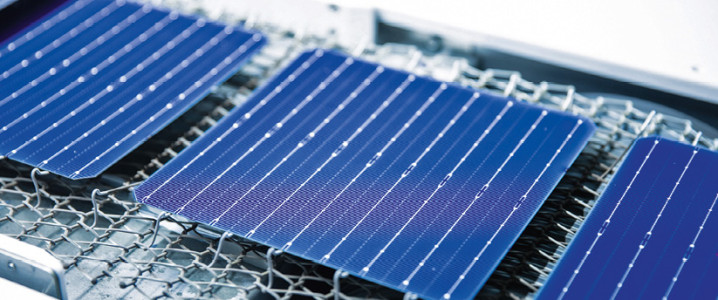
China will once again be the biggest investor this year in alternative energy sources, spending some $940 billion on capacity and infrastructure. While still spending substantial sums on capacity, China will this year spend more on grid expansion and support infrastructure in a much-needed change of priorities.
The figure above comes from the Global Energy Transition Report released this month by the China Enterprise Reform and Development Society, a state-linked think tank. According to the report, as of the end of 2025, China’s installed generation capacity from low-carbon energy sources accounted for 60.1% of the total. What’s more, China accounted for 63.6% of global new additions in alternative energy generation capacity last year.
China also generated 3.99 trillion kilowatt-hours of electricity from low-carbon sources, which represented 38.3% of the country’s total generation in 2025. These numbers are certainly impressive and only to be expected given China’s long-running and generous state support for things like wind and solar capacity, which are a twin focus of its energy transition plans, along with electric vehicles and battery storage.
Indeed, fast growth in low-carbon generation capacity continued this year as well. China’s total installed wind and solar power generation capacity exceeded 2 billion kW by the end of September, with 170 million kW in new capacity added over the first nine months of the year, the country’s National Energy Administration reported last month.
Solar capacity accounted for the larger portion of that total, at 1.31 billion kW as of end-September, the NEA data showed, while wind capacity hit 700 million kW. For solar, annual growth in capacity stood at 16.5%, while growth in wind capacity stood at 20.4%.
However, the numbers do not show the other side of China’s transition efforts: overcapacity, cutthroat competition, and bankruptcies. Overcapacity has been especially acute in solar equipment and electric vehicles, and has prompted the authorities to roll back subsidies in order to motivate sector players to learn to walk on their own two feet. China currently accounts for more than 80% of the total global output of solar panel components and 70% of the global output of wind power equipment. Cheap Chinese components have been instrumental in driving down the costs of wind and solar generation by over 60% for wind and 80% for solar.
China is, of course, also the world’s largest market for electric vehicles, and due to the saturation of this market and the resulting sales growth slowdown, Chinese EV makers have gone on to grow internationally, offering low-cost, high-quality vehicles that have worried European carmakers. The latter cannot really compete on cost because of the cheaper energy inputs in China—because despite its massive wind and solar growth, China still generates almost half of its electricity from coal.
In the first half of the year, China generated 49.7% of its electricity from coal power plants, Bloomberg reported last week, which was the first time coal’s share in the energy output mix fell below 50%. However, this may be a reversible development, related to seasonal variations in wind and solar output, and demand patterns.
It is because of that variation, which is a hallmark of wind and solar generation, that China is shifting its investment focus to grid expansion and infrastructure. The importance of an adequate grid that can make the best of alternative energy sources whose output depends on the weather came into the spotlight relatively recently. Until then, focus was placed on just building more and more solar and wind installations. Once these installations started generating, and it turned out only a small portion of their output can in fact be utilized when there is enough demand for it, grids came to the fore.
China will invest an estimated $140 billion in grid expansion and related infrastructure this year, according to the International Energy Agency. The purpose is to make the country’s grid more efficient by capturing a bigger portion of its wind and solar generation. Currently, not only in China, alternative energy operators have to essentially “throw away” output when there is too little demand for it because there is no way to adjust output to demand, even with battery storage.
The curtailment problem has a solution in more transmission lines to carry electricity from remote wind and solar installations to major demand centers. However, as other countries have found out, it costs a lot of money and takes quite a bit of time. China has little choice but to spend the money and the time after its massive buildout in wind and solar over the past decade. So, the State Grid Corporation of China, the biggest grid operator in the country, expects to invest as much as $574 billion through 2030, which would be a massive 40% jump in spending on fixed assets compared to the five years to 2025, with a focus on grid expansion. This should ensure China’s number-one position on the energy transition spending chart for another five years.
Source: Oilprice