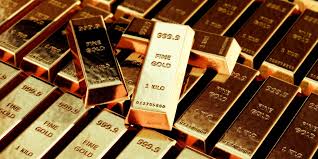
1. The precious metal broke through another record high on Friday, briefly rising to $3,534 before paring its gains. At its peak, gold prices were up 32% from levels at the start of the year — far outstripping the S&P 500’s 8% year-to-date gain.
The US specified that gold bars are subject to tariffs, the Financial Times reported on Thursday, citing documents it reviewed from the Customs and Border Protection agency.
A ruling letter dated July 31 from the agency said that one-kilo and 100-ounce gold bars would be grouped under a customs code that would subject to levies, the outlet said. That means gold bars could be subject to the 39% tariff on goods from Switzerland, which is one of the world’s largest producer of gold bars.
Markets had previously assumed gold bars would be exempt from reciprocal tariffs, Helen Amos, a commodities analyst at BMO, wrote in a note on Friday. Trump’s original Liberation Day announcement included a separate customs code that said “non-monetary gold, unwrought, in the form of bullion and dore” would be exempt from import duties, she noted.
“If true, US citizens who tried to hedge the inflation impact of US President Trump’s trade taxes by buying gold bars must pay those same taxes on their hedge. The ruling suggests gold imported between 9 April and 7 August was subject to tariff,” Paul Donovan, the chief economist at UBS, wrote in a note.
2. Hasn’t pointed to Trump’s attempts to broker a peace deal between Russia and Ukraine, which has involved imposing steep tariffs on some of Russia’s top trading partners, like India, and threatening to impose secondary sanctions on Russia if a ceasefire isn’t achieved by Friday.
China, another of Russia’s top trading partners, has also yet to reach a trade deal with the US, despite the looming August 12 deadline before higher tariffs take effect.
3. To top it off, investors have been fretting over the strength of the US economy, which has been flashing key signs of weakness despite robust GDP growth over the second quarter.
Most recently, cracks have been appearing in the job market, with the US adding fewer jobs than expected in July. Job growth over the months of May and June, meanwhile, saw a large downward revision, signaling that hiring has been weaker than markets originally thought.
That, combined with several inflation metrics ticking higher, has stoked fear among some investors that the US could be headed toward stagflation, a scenario where inflation remains hot and growth slows. That situation is thought to be even worse for policymakers to solve than a typical recession, as high prices prevent the central bank from cutting rates to give the economy a boost.
Source: Africabusinessinsider