The deal involves a gold stream, a contractual entitlement to receive a specified share of production under agreed payment terms, rather than shares in the mining company or ownership of the mine itself.
Empress acquired the existing entitlement from Appian Tongon Streamco. The $62 million purchase payment therefore goes to the seller of that financial interest, rather than representing an equivalent new investment paid directly to Tongon’s operator.
The transaction was agreed in September. Its completion, announced on 19 October, is the fresh development.
According to Empress’ completion announcement, the company also closed related Appian financing and increased its full-year 2026 attributable production forecast to 8,000–8,500 gold-equivalent ounces, from 7,045–7,430.
The company said its next priority was receiving initial deliveries and demonstrating the stream’s contribution to its financial results. Those forecasts remain dependent on operating performance.
An investment in production, rather than mine ownership
Empress’ Tongon investment disclosure sets out an initial entitlement to 3.58% of payable gold production, declining to 2.93% and subsequently 0.81% as contractual delivery thresholds are reached.
Empress pays an additional amount equivalent to 0.5% of the prevailing market price for each gold delivery under the agreement. The stream has a contractual term of approximately 29 years.
That duration is not a guarantee that the mine will produce gold for 29 years. Continued deliveries depend on available reserves, exploration success, production and the terms of the agreement.
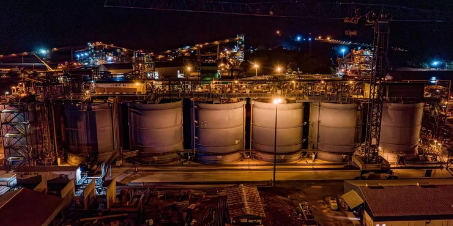
Tongon is an established open-pit operation in northern Côte d’Ivoire, with production dating to 2010. Its existing processing facilities provide a platform for treating ore from nearby deposits if exploration and technical work support their development.
Under the September transaction agreement, Empress arranged a $75 million senior secured credit facility with Appian, including a $55 million initial draw to help finance the acquisition. The structure allows it to buy the stream partly with borrowed money, making financing costs part of the investment’s economics.
Additional payments to the seller may become payable depending on future production and the stream’s returns. The $62 million is therefore the upfront consideration, rather than necessarily the final lifetime cost.
Atlantic’s priority is to sustain and improve production at Tongon, while Empress’s returns will depend on gold deliveries, market prices and its financing obligations.
The deal shows how financial rights to African mineral production can be transferred without changing ownership of the mines themselves. Assessing its implications requires distinguishing who owns and operates the mine, who receives the upfront payment and who holds the rights to future production.
Source: Africabusinessinsider