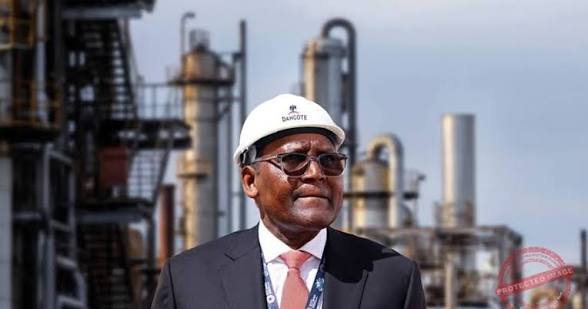
In a recent BBC interview, Dangote stated that negotiations with the Kenyan government had advanced greatly, and that construction might begin as early as October.
“The plans have actually gone very far with Kenya,” Dangote said when asked about the progress of the project.
He added that the company was targeting an October groundbreaking, after which construction would begin.
“We’ve gone very far, and I think by October we would be doing groundbreaking; once we break ground, we would start the construction,” he stated during the interview.
The proposed refinery, which is slated to be built near Lamu on Kenya’s northern coast, will have a processing capacity of 700,000 barrels per day.
From Tanzania to Kenya
The planned refinery has evolved numerous times since plans for a regional East African refinery gained traction earlier this year.
Kenya, Tanzania, Uganda, South Sudan, and the Democratic Republic of the Congo were investigating the potential of building a regional refinery, according to Kenyan President William Ruto in April.
At first, Tanga in Tanzania was thot to be the ideal site, and Dangote said he would lead the initiative if partner nations offered the necessary backing.
Kenya, however, had become Dangote’s top choice by May. At first, Mombasa was selected because of its deepwater port and easy access to a sizable regional market.
When Edwin Devakumar, a Dangote Group official, declared Lamu as the ultimate location in July, the intended site was once again changed.
The intended capacity was increased concurrently from 650,000 barrels per day to 700,000 barrels per day.
Dangote Industries intends to use a combination of domestically produced cash, bond financing, and equity obtained through an IPO to finance the Kenyan refinery.
Assuming the Lagos plant finally grows to its intended 1.4 million barrels per day, the project would become Africa’s second-largest refinery by nameplate capacity behind the Dangote Refinery if it achieves its anticipated 700,000 barrels per day capacity.
The Lamu site may provide the refinery with access to the Lamu Port-South Sudan-Ethiopia Transport (LAPSSET) corridor, a significant infrastructure project intended to link landlocked markets throughout East Africa with Kenya’s northern shore.
The construction of the refinery, which is anticipated to take three to five years, would provide Kenya and its neighbors with petroleum products, thereby lowering the region’s reliance on imported refined fuel.
The largest foreign refinery wager made by Dangote
Following the establishment of the 650,000-barrel-per-day Dangote Refinery in Lagos as an important source of refined fuel for Nigeria and worldwide markets, the Kenyan project would greatly increase Dangote’s dominance in Africa’s downstream petroleum business.
Source: Africabusinessinsider