Converted at an exchange rate of approximately ₦1,435 to the $1, the latter figure equates to around $29.9 billion.
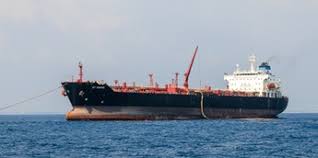
According to the National Bureau of Statistics (NBS), maritime transport remains the dominant mode for Nigeria’s external trade, outperforming air, road, and pipeline channels.
The first quarter of 2025 saw export volumes via sea touch ₦20.36 trillion, while the second quarter figures climbed to ₦22.51 trillion. This compares with ₦19.02 trillion and ₦19.25 trillion in the same quarters of 2024.
Analysts attribute this robust performance to the twin impact of foreign-exchange (FX) reforms and an expanded export base, led in part by the strategic operations of Dangote Industries Limited’s refinery complex.
Dr Muda Yusuf, Director of the Centre for the Promotion of Private Enterprise, stressed that “the 12 % growth in maritime exports in the half-year is a reflection of the fact that the level of export has been increasing largely as a result of reform.
“Exchange-rate depreciation is a major driver of growth in exports because it makes your exports cheaper, more attractive, and you make more money.”
Yusuf pointed to reforms at the Central Bank of Nigeria (CBN) under Governor Yemi Cardoso, noting the elimination of the old dual-rate regime (with an official rate of about ₦450 and a parallel market rate of nearly ₦700) as a catalyst for renewed exporter activity.
“Under the previous CBN regime… many exporters were discouraged. But with the current reform and the unification of the exchange rate, that differential has been removed. Whatever you now bring, you can get full value for it using the prevailing market rate.”
Beyond FX policy, Malik Yusuf emphasized the role of the Dangote refinery in driving export volumes, particularly of fertilizers and refined petroleum products.
From a pan-African perspective, the trend holds broader significance: Nigeria’s shift from dependence on raw commodity exports to value-added manufacturing and processing is beginning to resonate across the region.
As the largest economy in Africa, Nigeria’s export resurgence signals an opportunity for neighbouring countries and regional supply chains.
For instance, Dangote’s plans to ramp up fertiliser output and expand across Africa have been publicised.
A May 2025 report cited by BusinessDay quoted Aliko Dangote estimating exports of around 16,000 tons of fertiliser, generating roughly $6.5 million to $7 million per day.
Maintaining momentum will require continuity in policy, deeper structural reforms and enhanced private-sector participation.
Source: Africabusinessinsider