Older Americans are sitting on $110 trillion of wealth. Their heirs might not get it anytime soon.
Financial advisory firms like to talk about a looming event called “the great wealth transfer,” where the huge and very wealthy baby-boomer generation dies off and their children inherit their money.
But the process may be more of a slow drip than a sudden windfall. The two generations that hold the most wealth are baby boomers, who are between age 61 and 80, and Gen X, who are between 45 and 61.
People are living longer, and wealthy Americans in particular are spending large sums on longevity. They are also spending more on themselves with luxury travel and upscale retirement communities. Some wealthy people are already parceling out their riches in smaller doses to children and grandchildren, helping them with home purchases, college tuition and vacations.
When they do die, many will pass wealth first to their spouses. Boomers are still getting windfalls from their own elderly parents. And many Americans of modest means won’t inherit anything at all.
“There’s no world in which a great wealth transfer does not happen. It’s just math,” said John Sabelhaus, a Brookings Institution economist and former Federal Reserve official who studies wealth. But, he adds, “There is a world in which it’s misunderstood.”
Still accumulating
Older Americans’ wealth has grown an outsize amount in the past few decades. Many of these people bought stocks or started businesses long ago, and those have soared in value over the years. In the fourth quarter alone, boomers gained over $1 trillion in wealth, more than any other group.
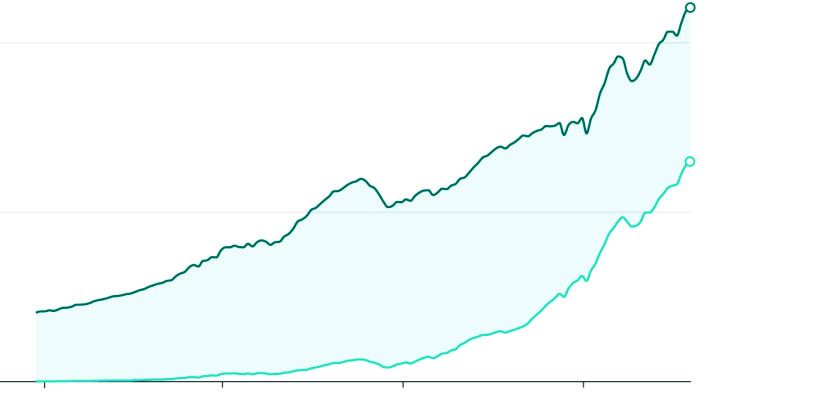
Sabelhaus and his colleagues used Fed data to calculate the total wealth that Americans can pass down when they die (this is a family’s net worth minus pensions and annuities that they typically can’t give to heirs). The researchers found that this so-called bequeathable wealth rose from 256% of gross domestic product in 1997 to 424% in 2021, the last year of available data.
A staggering 97% of that increase was due to wealth gains in households where the head of household was 55 or older. About 75% of the total increase was from gains by the wealthiest 10% of households age 55 and older, the analysis found.
The richest Americans are particularly interested in longevity, pouring billions into investments in the area. A UBS survey of 87 of the bank’s billionaire clients found that most of them expect to live longer than they did a decade ago.
Older Americans may keep accumulating wealth, especially if the stock market keeps rising. But some will spend it on living costs and expensive long-term care, leaving less for heirs.
When they die, many will leave their money to their spouses, who are often in their same generation. This year, around $1.3 trillion is expected to be passed onto spouses, compared with about $2 trillion to heirs in Gen X and younger generations, according to projections from research firm Cerulli Associates.
The age that people are inheriting money from older generations has risen. In Fed surveys conducted between 1998 and 2010, Americans in their late 50s were most likely to report receiving an inheritance. People in their mid-60s were most likely to report inheritances in surveys conducted between 2013 and 2022.
Source: msn