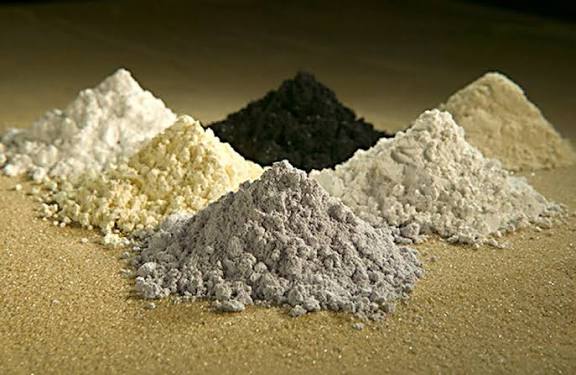
Altona Rare Earths said on Monday it would rebrand as NeoTerra Group Plc, reflecting a strategic shift beyond rare earth exploration toward a broader portfolio of critical minerals that includes gallium, fluorspar and copper.
The rebranding comes as governments across North America and Europe scramble to diversify supply chains for minerals increasingly viewed as vital to economic and national security.
At the centre of NeoTerra’s strategy is the Monte Muambe project in northwestern Mozambique, where the company has identified rare earth elements, fluorspar and what it describes as one of the world’s few known primary gallium resources.
Gallium has emerged as one of the most strategically sensitive minerals in global trade. The metal is used in semiconductors, telecommunications equipment, radar systems, military technologies and high-performance electronics.
The market gained geopolitical significance after China, which dominates global gallium production, imposed export restrictions on the mineral as tensions with the United States escalated over advanced technologies.
That has prompted Western governments and manufacturers to search for alternative sources of supply, creating fresh opportunities for mining projects outside China.
The United States has already signalled interest in the Mozambique development.
Last year, the U.S. Trade and Development Agency awarded $1.875 million to support technical and economic studies at Monte Muambe, helping advance plans for what could become one of Africa’s most strategically significant critical minerals projects.
The company is also expanding beyond Mozambique. Through its Sesana project in Botswana, NeoTerra has exposure to copper and silver resources, positioning itself to benefit from rising demand for metals required in power grids, electric vehicles and renewable-energy infrastructure.
The development shows a broader shift underway across Africa. Countries including Zambia, the Democratic Republic of Congo, Namibia, South Africa, Tanzania and Mozambique are increasingly attracting international attention as governments and investors seek alternatives to existing critical mineral supply chains.
The continent holds substantial reserves of minerals considered essential for the global energy transition, including copper, cobalt, graphite, lithium, manganese and rare earth elements.
Source: Africabusinessinsider