Within days, Morocco announced that its $1 billion Tiznit-Dakhla Expressway would bear the name of U.S. President Donald Trump, Washington backed the first federally supported investment project in Western Sahara, and Trump formally reaffirmed U.S. recognition of Moroccan sovereignty over the territory while outlining plans for deeper economic cooperation.
The developments mark one of the clearest indications yet that U.S. policy on Western Sahara is moving beyond diplomatic recognition toward economic engagement.
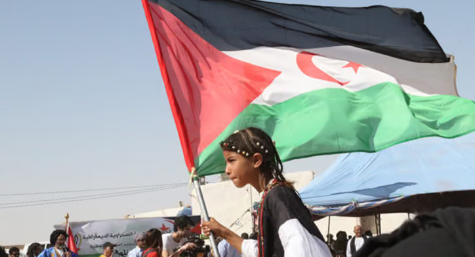
Western Sahara, a mineral-rich territory on Africa’s Atlantic coast, has remained disputed for decades. Morocco controls most of the territory and considers it part of the kingdom, while the Algeria-backed Polisario Front seeks independence and has long pushed for a UN-backed referendum on self-determination.
The United States became the first major Western power to recognize Moroccan sovereignty over Western Sahara during Trump’s first administration.
His latest statement signals that Washington intends to maintain—and potentially deepen—that position.
Diplomacy gives way to investment
On July 27, King Mohammed VI announced that Morocco’s 1,055-kilometre Tiznit-Dakhla Expressway, a project valued at around $1 billion, would be renamed the Donald J. Trump Highway, describing the decision as an expression of his “deep appreciation” for the U.S. president.
A day later, the U.S. Trade and Development Agency (USTDA) approved $5.7 million for a feasibility study supporting the proposed ORNX green ammonia project in Western Sahara.
The project, led by a consortium including U.S.-based Ortus Climate Mitigation LLC and Spanish-German joint venture Acciona-Nordex Green Hydrogen, represents the first U.S. federal funding directed toward a commercial project in the disputed territory.
The project adds to Western Sahara’s growing international profile.
Beyond geopolitics, the territory has recently drawn global attention as one of the filming locations for Christopher Nolan’s blockbuster The Odyssey, bringing the disputed region to worldwide audiences..
The Hollywood production, combined with rising investor interest in renewable energy and critical minerals, reflects how Western Sahara is increasingly being viewed through both economic and cultural lenses.
On August 1, Trump reinforced the strategic direction of the relationship in a message to King Mohammed VI marking Morocco’s Throne Day.
“The United States has been clear: we recognize Moroccan sovereignty over Western Sahara, and we support Morocco’s serious, credible, and realistic autonomy proposal as the only basis for a just and lasting solution,” Trump wrote.
He went further by announcing a broader economic agenda.
Source: Africabusinessinsider