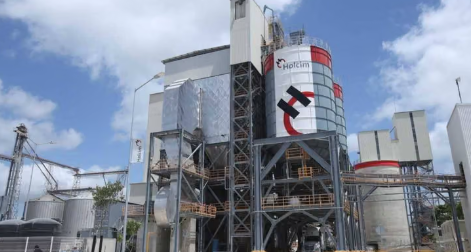
The latest transaction comes shortly after Huaxin formally entered Nigeria’s cement industry by completing its acquisition of Holcim’s 83.81% stake in Lafarge Africa, a move that positioned the Chinese company as a direct competitor to industry leaders Dangote Cement and BUA Cement in one of Africa’s largest construction markets.
Under the new agreement, Huaxin will acquire 100% of Holcim Philippines for an enterprise value of approximately $807 million, adding another strategic market to a rapidly expanding portfolio that already spans China, Central Asia, Africa and the Middle East.
Holcim said the deal will begin with the sale of a 67.6% stake for $527 million, with the remaining shares to be sold over the next three to five years, valuing the Philippine business at a minimum of $807 million.
The acquisition reflects a broader shift among Chinese industrial companies, many of which are accelerating overseas expansion as slowing domestic demand and a prolonged property downturn reshape the country’s construction sector.
Expanding beyond Africa
Huaxin’s Nigerian acquisition marked one of the most significant foreign investments in Africa’s cement industry in recent years.
By taking control of Lafarge Africa, the company secured an established manufacturing base, nationwide distribution network and a foothold in a market expected to benefit from long-term demand for housing and infrastructure.
The move also represented Holcim’s continued strategy of divesting businesses in selected emerging markets while focusing on higher-margin building solutions.
The Philippines acquisition builds on that momentum. Holcim Philippines operates four integrated cement plants and several grinding facilities, making it one of the country’s largest cement manufacturers. Adding those assets strengthens Huaxin’s presence in Southeast Asia while diversifying its revenue base beyond China.
For Africa, Huaxin’s continued expansion underscores the continent’s growing importance in global construction materials. Demand for cement is expected to remain strong as governments increase spending on roads, ports, railways, housing and industrial infrastructure.
Source: Africabusinessinsider