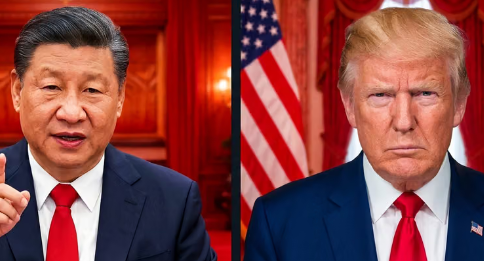
China targets chip market dominance as the US protects its lead
To achieve its target amid US export controls, domestic Chinese semiconductor suppliers like Cambricon Technologies and Biren Technology are projected to increase local AI processor shipments nearly sixfold to over 10 million units by 2030.
Meanwhile, the US has firmly rejected establishing joint regulatory frameworks or sharing technical capabilities with Beijing.
The US administration is directing its strategy under the White House policy framework, “Winning the AI Race: America’s AI Action Plan”, focusing on expanding domestic infrastructure and eliminating regulatory barriers.
President Trump asserted, “What they wanna do is stop our progress, because we’re leading China by a lot. And we’re going to keep it that way”.
Reinforcing this national focus, US Secretary of State Marco Rubio affirmed that “Winning the AI Race is non-negotiable”.
South Africa partners with China to build a new artificial intelligence hub
While Washington focuses on domestic development and maintaining its technological lead, South Africa is deepening its scientific cooperation with Beijing.
Following bilateral discussions in Wuhan, representatives from both governments announced plans to construct a joint Artificial Intelligence Talent Development and Innovation Centre inside South Africa to train local tech workers.
South African Deputy Minister of Science, Technology and Innovation Dr. Nomalungelo Gina stated, “The centre will strengthen innovation capabilities and deepen the bilateral cooperation between our countries in the field of artificial intelligence”.
This new facility forms part of an agreement established between South African President Cyril Ramaphosa and Chinese President Xi Jinping.
In addition to artificial intelligence, South Africa is prioritizing joint technical engagement in 5G mobile networks, biotechnology, and advanced manufacturing.
Source: Africabusinessinsider