Senegal’s debt restructuring plans face renewed uncertainty after the ruling Pastef party said it would not approve the government’s revised 2026 budget, raising questions over the timing of a proposed $2.2 billion International Monetary Fund (IMF) programme.
Pastef, which holds a large majority in the National Assembly, said it opposed the amended budget because of disagreements over fiscal decisions, financing arrangements and the guarantees provided to parliament, according to a Reuters report.
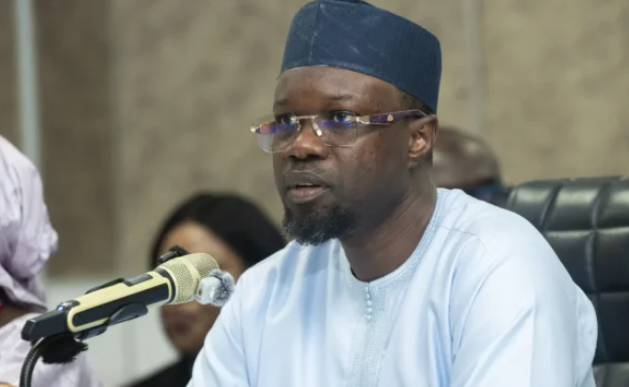
In a statement, the party led by former Prime Minister Ousmane Sonko cited “disagreements over certain budgetary decisions, the chosen financing arrangements and the insufficient guarantees provided to parliament”. It nevertheless said it remained open to engaging with the government to establish a new budget.
The dispute creates a potential obstacle for the administration as it seeks parliamentary backing for a revised fiscal framework and works to restore debt sustainability.
IMF programme faces parliamentary hurdle
Senegal reached a staff-level agreement with the IMF in early September for a $2.2 billion, 36-month Extended Credit Facility intended to support the government’s reform programme.
However, the revised budget’s rejection could delay progress towards the programme, which is central to the government’s broader debt restructuring strategy.
The West African country has been grappling with a substantial debt burden after authorities uncovered billions of dollars in borrowing that had been misreported by the previous administration.
IMF figures put Senegal’s debt at 132% of gross domestic product at the end of 2024, highlighting the scale of the fiscal challenge facing the government.
The authorities must now navigate disagreements within the ruling political establishment while seeking to maintain the reform commitments underpinning negotiations with international creditors.
Prime Minister Ahmadou Al Aminou Lo plans to hold a press conference on Sunday to discuss the revised budget, which the government says is intended to implement a new framework aimed at improving living standards.
Growth forecast cut as deficit widens
The amended 2026 budget presents a weaker fiscal and economic outlook than the original plan.
The government has lowered its real GDP growth forecast to 2.7%, from approximately 5% in the initial budget. The projected fiscal deficit has widened to 7.6% of GDP from 5.4%.
A major contributor to the deterioration is the planned increase in energy subsidies, which are set to triple to 790.3 billion CFA francs, equivalent to approximately $1.36 billion, from 250 billion CFA francs.
The higher subsidy allocation adds pressure to public finances as the government attempts to protect households from energy costs while addressing the consequences of previously undisclosed borrowing.
The combination of slower projected growth, a larger deficit and substantial subsidy expenditure complicates efforts to stabilise public debt and secure financing on sustainable terms.
Debt restructuring depends on fiscal credibility
Senegal’s immediate challenge is to establish a budget that can secure parliamentary approval while maintaining a credible path towards fiscal adjustment and debt sustainability.
The IMF agreement is an important component of that process, providing a framework for reforms and external financial support. Any delay could complicate coordination with creditors and the government’s efforts to restore confidence in its public finances.
The outcome will depend on whether the government and Pastef can resolve their disagreements over budget decisions and financing arrangements. Until a revised fiscal plan gains sufficient political backing, uncertainty will remain over the timing of the IMF programme and the next steps in Senegal’s debt restructuring.
Source: Africaneconomyinc